 NINETYRISE
Guide
How to stop procrastinating: practical steps that work
Procrastination is rarely about laziness. It is usually about avoiding an uncomfortable feeling. Once you see that, getting started becomes much easier.
Why we procrastinate
Researchers such as Tim Pychyl and Fuschia Sirois describe procrastination mainly as a problem of managing emotions, not time. A task feels boring, confusing, overwhelming or risky, so we do something that feels better right now. The relief is immediate; the cost comes later.
That is why "just try harder" rarely works. What helps is making the task feel smaller and clearer, so that starting is no longer uncomfortable.
Shrink the first step
Most of the resistance sits right before you start. So make the start tiny: not "write the report" but "open the document and write the title". Not "clean the flat" but "clear the kitchen table".
Give yourself permission to stop after two minutes. Very often you will not want to, because the hardest part, starting, is already behind you.
Practical steps you can use today
- Name what you are avoiding. Writing it down makes a vague dread concrete.
- Define a two-minute first step. Make it so small it feels almost silly.
- Start a focused block. Set a timer, put the phone away and work on only that one thing.
- Plan fewer tasks. A list of twenty items invites avoidance. Choose up to three key tasks for the day.
- Capture distractions instead of following them. When an idea pops up, note it and return to the task.
- Be kind after a slip. Research suggests that forgiving yourself for procrastinating makes you less likely to procrastinate next time.
Build a routine that makes procrastination harder
One-off tricks help in the moment; habits help for good. A daily block of deep work at a fixed time, a short planning ritual in the morning and a few anchor habits make your days more predictable, and predictable days leave less room for avoidance. A 90-day challenge is a simple way to build that routine.
How NinetyRise helps you get started
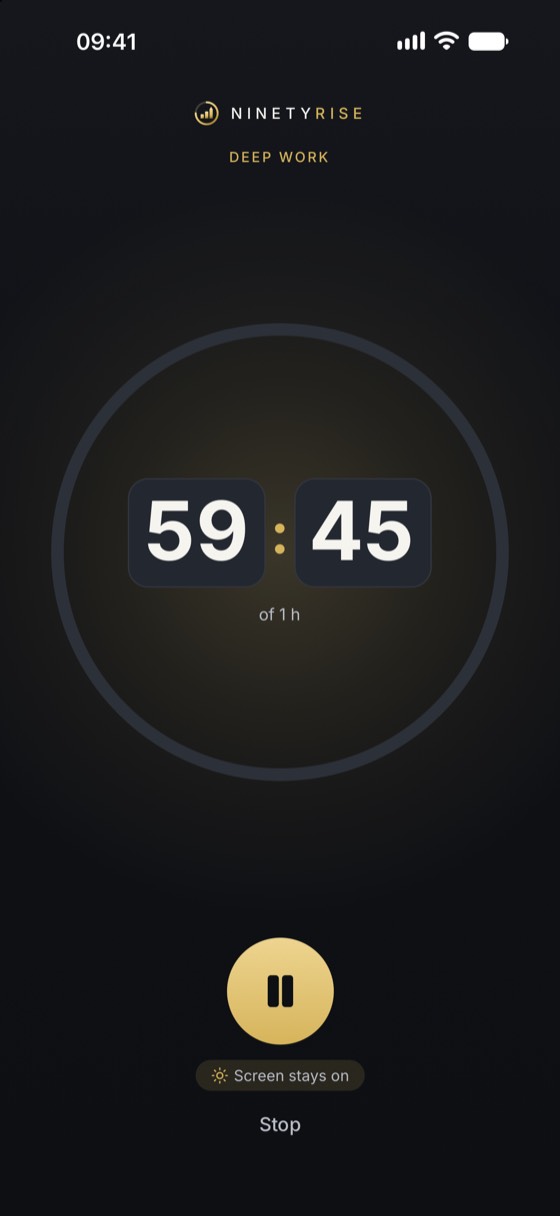
NinetyRise has a screen made exactly for this moment, called "I can't get started". You pick what you are putting off, shrink it to a first step of at most two minutes and start a two-minute focus block on it, which can continue as a full deep work session once you are rolling. The daily plan keeps you on up to three key tasks, voice capture parks ideas for later, and the deep work timer keeps your screen on and records your focused time.
Frequently asked questions
Is procrastination a sign of laziness?
Usually not. Procrastination is most often a way of avoiding an unpleasant feeling about a task, such as boredom, uncertainty or fear of doing it badly.
What is the fastest way to stop procrastinating right now?
Choose the task, shrink it to a first step of two minutes or less, put your phone away and start a short timer. Starting is the hardest part.
Does a focus timer help with procrastination?
For many people, yes. A timer makes the commitment small and clear ("just this block"), which lowers the barrier to starting.